Skipping oil changes does not usually cause a sudden failure. Instead, it slowly shortens the life of your engine. Eventually, this can lead to:
And at that point, you’re looking at a major repair or replacement.
What Oil Additives Actually Do
Depending on the product, additives can help:
•Reduce friction and wear
Helps protect internal components, especially in higher-mileage engines
•Clean internal deposits
Breaks down sludge and buildup over time
•Improve oil performance
Enhances lubrication under high heat and stress
•Condition seals
Helps reduce minor oil leaks in aging engines
Are Additives a Replacement for Oil Changes?
No. This is important. Oil additives are not a substitute for regular oil changes. They are a supplement, not a solution.
Think of it like this:
Regular oil changes replenish the oil and its built-in protection package. Premium oil services and professional additives can provide additional support when the engine needs it.
Used properly, quality oil, regular service, and the right additive can work together to help protect your engine.
What Is Included in a Premium Lube, Oil, and Filter Service?
A premium lube, oil, and filter service can include more than just pulling the drain plug and pouring in fresh oil.
One major benefit is the use of a motor oil cleaner before the oil is drained. This cleaner is added to the existing oil and allowed to run through the engine before the service is completed. The purpose is to help loosen and suspend deposits, sludge, and debris so more of that contamination leaves the engine when the oil is drained.
That matters because a standard oil drain does not always remove everything. Heavy debris, varnish, sludge, and gunk can remain inside the engine, especially if oil changes have been stretched too far in the past.
A premium service helps promote a cleaner drain and gives the fresh oil a better starting point.
This is also one of the reasons we recommend being careful with quick lube services. Fast does not always mean thorough. A proper oil service should allow enough time for the old, debris-filled oil to drain correctly, the right oil and filter to be installed, and the vehicle to receive a basic inspection from a trained technician.
Saving ten minutes today is not worth creating engine problems down the road.
The Inspection Matters Too
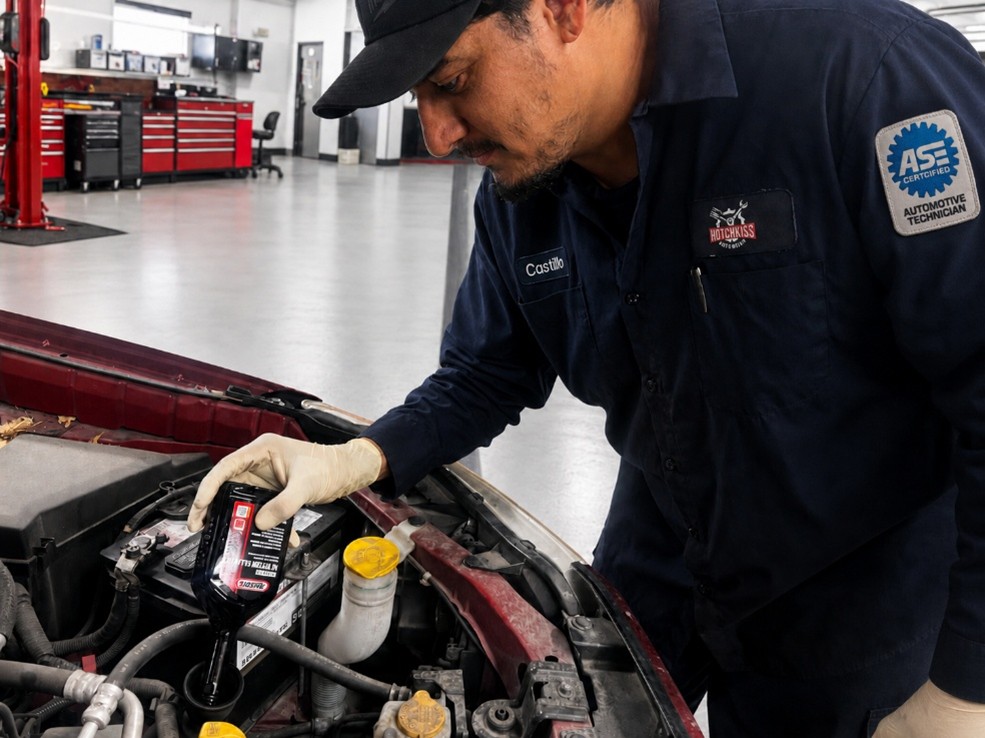
Another major benefit of getting regular lube, oil, and filter services at a certified repair shop is that a trained technician gets eyes on the vehicle.
At many neighborhood repair shops, including Hotchkiss Auto Repair, these services often include a complimentary inspection. That inspection gives us a chance to look over major systems and catch small problems before they turn into expensive repairs.
During an oil change inspection, we may check things like:
•Battery condition
•Tires
•Brakes
•Fluid levels
•Belts and hoses
•Leaks
•Suspension components
•Lights
•Wipers
This matters because most customers do not get underneath their vehicle every few thousand miles. We do.
Catching a weak battery, worn tire, leaking fluid, or brake concern early can help prevent breakdowns, safety issues, and surprise repair bills.
In other words, a good oil change is not just about the oil. It is a regular health check for your vehicle.
When Additives Make the Most Sense
Oil additives and premium oil services can be especially helpful if:
•Your vehicle has higher mileage
•You have gone longer between oil changes in the past
•You are starting to see minor oil consumption
•You want to reduce sludge and buildup
•You want to extend the life of your engine
•You plan to keep your vehicle for a long time
They are not a cure-all, but they can be a smart part of a long-term maintenance plan.
Real-World Shop Perspective
We see a wide range of vehicles come through the shop.
Some customers stay on top of oil changes, and their engines run strong well past 150,000 miles. Others skip them regularly, and by the time issues show up, the damage is already done.
The difference is usually not dramatic in the moment. It is what happens over time that matters.
When we combine:
•Consistent oil changes
•Quality oil
•Proper drain time
•The right filter
•Premium engine cleaning when needed
•A trained inspection during service
We see better long-term results.
How Often Should You Change Your Oil?
There is no one-size-fits-all answer, but a good general rule is:
•Every 3,000 to 5,000 miles for conventional or blended oils
•Every 5,000 to 7,500 miles for synthetic oil, depending on the vehicle
Driving habits, weather, engine design, oil type, and vehicle age all play a role.
If you do a lot of short trips, sit in traffic, drive in extreme temperatures, tow, idle often, or have a higher-mileage vehicle, you may need oil changes more often than the factory maintenance reminder suggests.
When in doubt, it is better to ask and stay ahead of it.
Let’s Wrap This All Up
Skipping oil changes might not seem like a big deal today, but over time, it can lead to serious engine problems.
The good news is that oil changes are one of the easiest and most affordable ways to protect your vehicle. Regular maintenance, quality oil, the right filter, proper service procedures, and helpful products like Wynn’s can make a huge difference in how long your engine lasts and how well it performs.
And when your oil service is done by a certified repair shop, you get more than fresh oil. You get trained eyes on your vehicle, a chance to catch problems early, and a better shot at avoiding breakdowns and expensive repairs.
If you have fallen behind on oil changes, or if you just want to make sure you are doing everything you can to protect your engine, schedule your next lube, oil, and filter service with Hotchkiss Auto Repair. We will help you get back on track and keep your vehicle running strong.
Your engine and your wallet will thank you.